
SMaSH stands for Single Malt and Single Hop, and it is exactly what it sounds like: one base malt, one hop variety, nothing else propping up the flavor. No specialty grain, no hop blend, no fruit or spice to hide behind. It is the opposite of the trend toward stacking six malts and five hops into one recipe, and it has quietly become one of the best teaching tools in homebrewing.
The idea has been floating around forums and sites like Homebrew Academy for years, and the logic holds up: when a beer only has one malt and one hop in it, every flavor and aroma you taste has to have come from one of those two ingredients. There is nowhere else for it to come from. Brew a handful of SMaSH batches and you start to actually recognize what Vienna malt tastes like versus Maris Otter, or what Citra smells like next to Saaz, instead of just guessing at tasting notes on the back of a hop bag.
Below is the philosophy in more detail, the one loophole extract brewers need to know about, and three full SMaSH recipes you can brew this weekend, each built around a different malt-and-hop pairing so you get a genuinely different beer out of each one.
Why Bother Brewing a SMaSH Beer
The obvious objection is that a one-malt, one-hop beer sounds boring next to a barrel-aged imperial stout or a hazy IPA with five hop additions. In practice it is the opposite. A well-made SMaSH beer is clean, focused, and genuinely good to drink, and it does something a complicated recipe cannot: it isolates a single variable so you can actually learn from it.
Brew the same hop with three different base malts (say, Pilsner, Vienna, and Maris Otter) and you will taste, directly, how much the base malt changes the finished beer even when the hop never changes. Do the reverse, one malt and three hops, and you isolate the hop instead. That kind of controlled experiment is exactly how professional brewers develop new recipes, and it is available to anyone with a five-gallon kettle.


The One Rule (and the Malt Extract Loophole)
The purist’s rule is simple: one malt, one hop, full stop. For all-grain brewers this is easy, since you control exactly what goes into the mash tun. Extract brewers have a harder time, because most liquid and dry malt extract is a blend of base malt plus a little something else (Carapils, wheat, or crystal malt) for body and head retention, which technically breaks the single-malt rule the moment it goes in the pot.
There is a workaround. A small number of dry malt extracts really are milled from a single base malt with nothing blended in, and if you use one of those, your extract batch is a genuine SMaSH beer rather than a close approximation. Check the manufacturer’s own product page rather than a retailer listing, since that is usually the only place the exact grain bill behind the extract is spelled out. Our malt extract buying guide covers the options if extract brewing is where you are starting.
Three SMaSH Recipes to Brew This Weekend
Each of these uses one base malt and one hop, all-grain, scaled to a standard five-gallon batch. Pick the one that matches the beer you actually want to drink, or brew all three back to back to feel the difference the malt alone makes.
1. Pilsner Malt and Saaz: A Bohemian-Style SMaSH Pilsner

Pilsner malt is the lightest, cleanest base malt available, and pairing it with Saaz, the classic Czech noble hop, gets you about as close to a real Bohemian pilsner as a single-malt, single-hop recipe can. Expect a soft, faintly honeyed malt character with a spicy, herbal hop finish and almost no bitterness lingering past the swallow. If you want the commercial reference point, our Pilsner Urquell review covers the beer this style is built around.
| Grain Bill | 10 lb Pilsner malt, mashed at 150°F (66°C) for 60 min |
| Hop | Saaz (3.5% AA) |
| Hop Schedule |
|
| Yeast | Wyeast 2124 Bohemian Lager (or Saflager W-34/70 dry) |
| OG / FG | 1.050 / 1.010 |
| Estimated ABV | 5.2% |
| Estimated IBU | 26 |


2. Golden Promise and Citra: A Modern British-American Hybrid Pale Ale

Golden Promise is a Scottish base malt with a soft, biscuity sweetness, noticeably rounder than the crisper English Maris Otter. Paired with Citra, an aggressively tropical American hop, you get an odd and genuinely likeable hybrid: a malt backbone that reads British, wrapped around hop character that reads straight out of San Diego. It is a good weekend pale ale, easy to drink a full pint of without it turning cloying.
| Grain Bill | 10.5 lb Golden Promise malt, mashed at 152°F (67°C) for 60 min |
| Hop | Citra (12% AA) |
| Hop Schedule |
|
| Yeast | Safale US-05 (or any clean American ale yeast) |
| OG / FG | 1.052 / 1.011 |
| Estimated ABV | 5.4% |
| Estimated IBU | 38 |


3. Maris Otter and East Kent Goldings: A Classic English Bitter

This is the most old-school pairing on the list. Maris Otter is the benchmark English base malt, biscuity and a little nutty, and East Kent Goldings is the hop that has flavored English bitters for well over a century, earthy and floral with a touch of honey. Together they make something close to a traditional ordinary bitter, low in alcohol and built for a session rather than a single pint.
| Grain Bill | 8 lb Maris Otter malt, mashed at 154°F (68°C) for 60 min |
| Hop | East Kent Goldings (5% AA) |
| Hop Schedule |
|
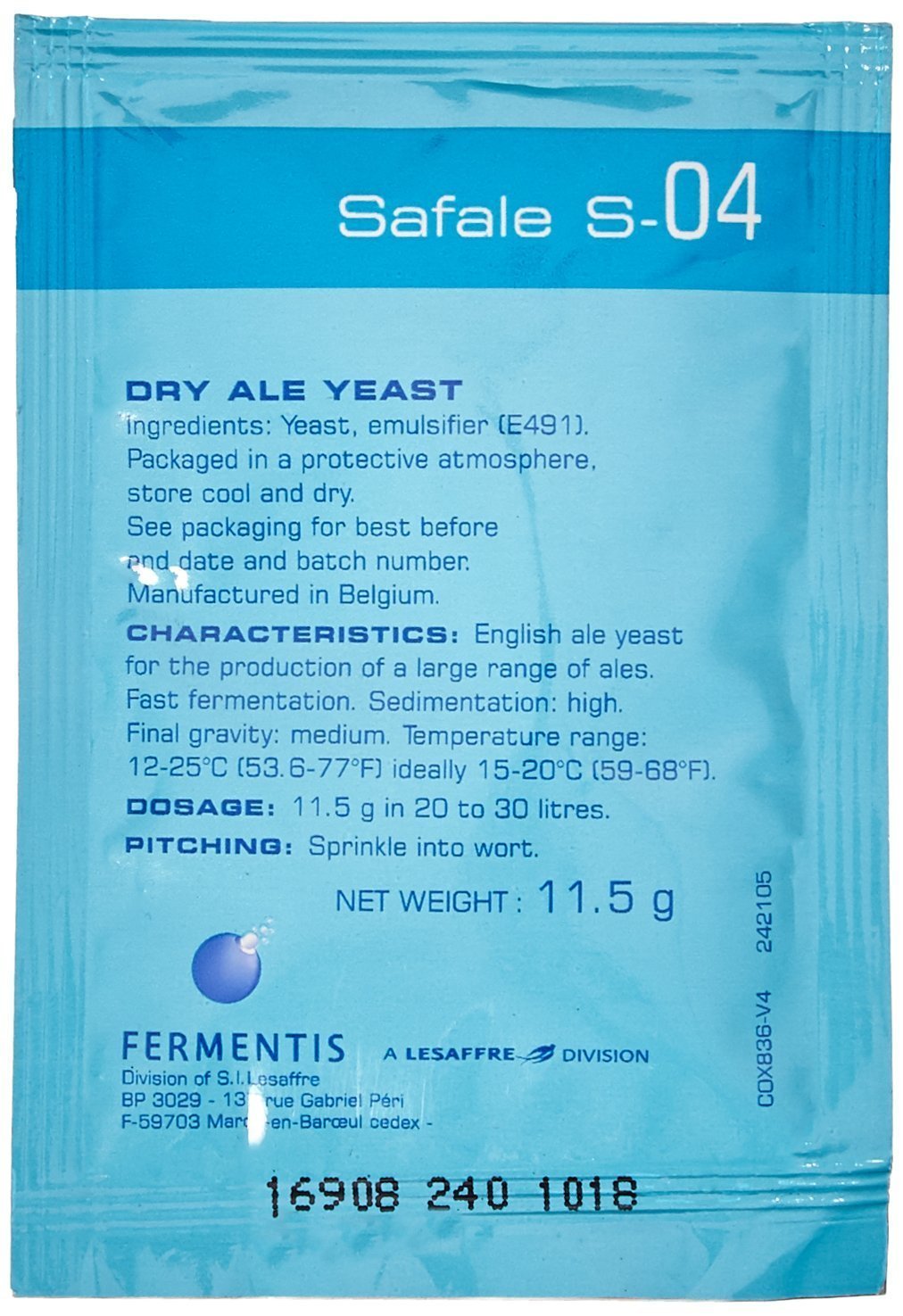
| Yeast | Wyeast 1968 London ESB (or Safale S-04 dry) |
| OG / FG | 1.040 / 1.010 |
| Estimated ABV | 3.9% |
| Estimated IBU | 28 |


What You Will Need
You only need three ingredients per batch beyond water and yeast nutrient, which is the whole point. Sourcing locally is always fine, but here is a hydrometer if you do not already have one, plus our full ingredient buying guides for building your own SMaSH combination beyond the three above.

For everything else, our brewing grains buying guide, brewing hops buying guide, and brewing yeast buying guide cover the full range of options, and our homebrew equipment buying guide and fermenter and carboy buying guide cover the gear.
Brew Day, Step by Step
1 | Mash · ~60 min Mash the single grain bill at the temperature listed for your recipe. There is no second malt to balance, so hitting the right mash temperature matters more than usual, it is the main lever you have left for body and fermentability. |
2 | Boil · 60 min Bring the wort to a boil and work through the hop schedule. Every addition is the same hop at different times, so what changes is bitterness versus aroma, not flavor character. |
3 | Ferment · Per yeast strain Pitch your chosen yeast once the wort has cooled to fermentation temperature and hold it steady. A clean-fermenting strain matters here more than in a complex recipe, since off-flavors from the yeast have nowhere to hide either. |
4 | Dry Hop (pale ale only) · 3 days If you are brewing the Golden Promise-Citra recipe, add the dry hop once primary fermentation has slowed, not during active fermentation, and pull it after 3 days to avoid grassy vegetal notes. |
5 | Condition and Package · 1-4 weeks depending on style Lager the pilsner cold for several weeks, condition the bitter closer to cellar temperature, and package the pale ale once gravity has held steady across a few readings. |
SMaSH Beer FAQ
What does SMaSH mean in homebrewing?
SMaSH stands for Single Malt and Single Hop. It is a beer brewed with exactly one type of base malt and one hop variety, with no specialty grains, hop blends, or additional flavorings.
Can you make a SMaSH beer with malt extract?
Yes, but only if the extract itself is milled from a single malt. Most dry and liquid malt extracts are blends, so check with the manufacturer directly. Muntons Light DME, for example, is confirmed pale malt only, which makes it one of the few extract options that qualifies as a true SMaSH.
What is the best hop for a beginner SMaSH beer?
Citra and Cascade are both forgiving, aromatic American hops that give a clear, recognizable flavor even at moderate amounts, which makes it easy to learn what the hop alone tastes like.
Do SMaSH beers taste worse than complex recipes?
Not necessarily. A well-executed SMaSH beer can be just as enjoyable as a beer with a dozen ingredients, it is simply more transparent about where its flavor comes from, which is exactly why it is useful for learning to brew.


