
There is no official cutoff, but most brewers and beer writers treat anything from 8% ABV up as high-ABV territory, with double IPAs, imperial stouts, barleywines, and Belgian quads regularly landing between 8% and 15%. For comparison, a standard American lager sits at 4.2% to 5%, so an 8%+ beer is carrying somewhere between 60% and 200% more alcohol per pour than the beer most people default to.

The ABV Chart, From Session to Extreme
Beer ABV covers more ground than most people assume, roughly 14 percentage points from the lightest lagers to the strongest barrel-aged stouts. That is a wider spread than almost any other beverage category outside of straight spirits.
| Category | ABV range | Real examples |
|---|---|---|
| Ultra-light lager | 2.4% to 4% | Miller64 (2.8%), Michelob Ultra (4.2%) |
| Standard lager / lite | 4% to 5.5% | Bud Light (4.2%), Budweiser (5.0%), Coors Light (4.2%) |
| Standard ale | 4% to 7% | Guinness Draught (4.2%), pale ale, hefeweizen |
| Double / Imperial IPA | 7% to 10% | Pliny the Elder (8.0%), Dogfish Head 90 Minute (9.0%). See our full IPA guide. |
| Belgian quad | 9% to 13% | St. Bernardus Abt 12 (10.0%), Rochefort 10 (11.3%). More in our Belgian beer brands guide. |
| Imperial stout | 8% to 15% | North Coast Old Rasputin (9.0%), Founders KBS (11.2%) |
| Barleywine | 8% to 15% | Sierra Nevada Bigfoot (9.6%), Anchor Old Foghorn (9.0%) |
Why These Beers Get So Strong
For a full ranked list of the most extreme examples brewed in the US, see our strongest American beers roundup.
Big, high-ABV styles start with a much denser wort. An imperial stout’s grain bill often runs three to four times the size of a standard beer’s, producing enough fermentable sugar to challenge most brewing yeast. Standard ale yeast strains typically stop working somewhere around 10% to 12% ABV, when the ethanol concentration itself becomes toxic to the yeast cells. To push past that ceiling, brewers making 14% and 15% beers often switch to more alcohol-tolerant strains borrowed from winemaking or champagne production, or blend in sugars that ferment more completely than malt alone.
If you want to understand the calculation brewers use to hit these numbers in the first place, our ABV equation breakdown walks through the gravity math from original readings to a finished number on the label.
How to Actually Drink One
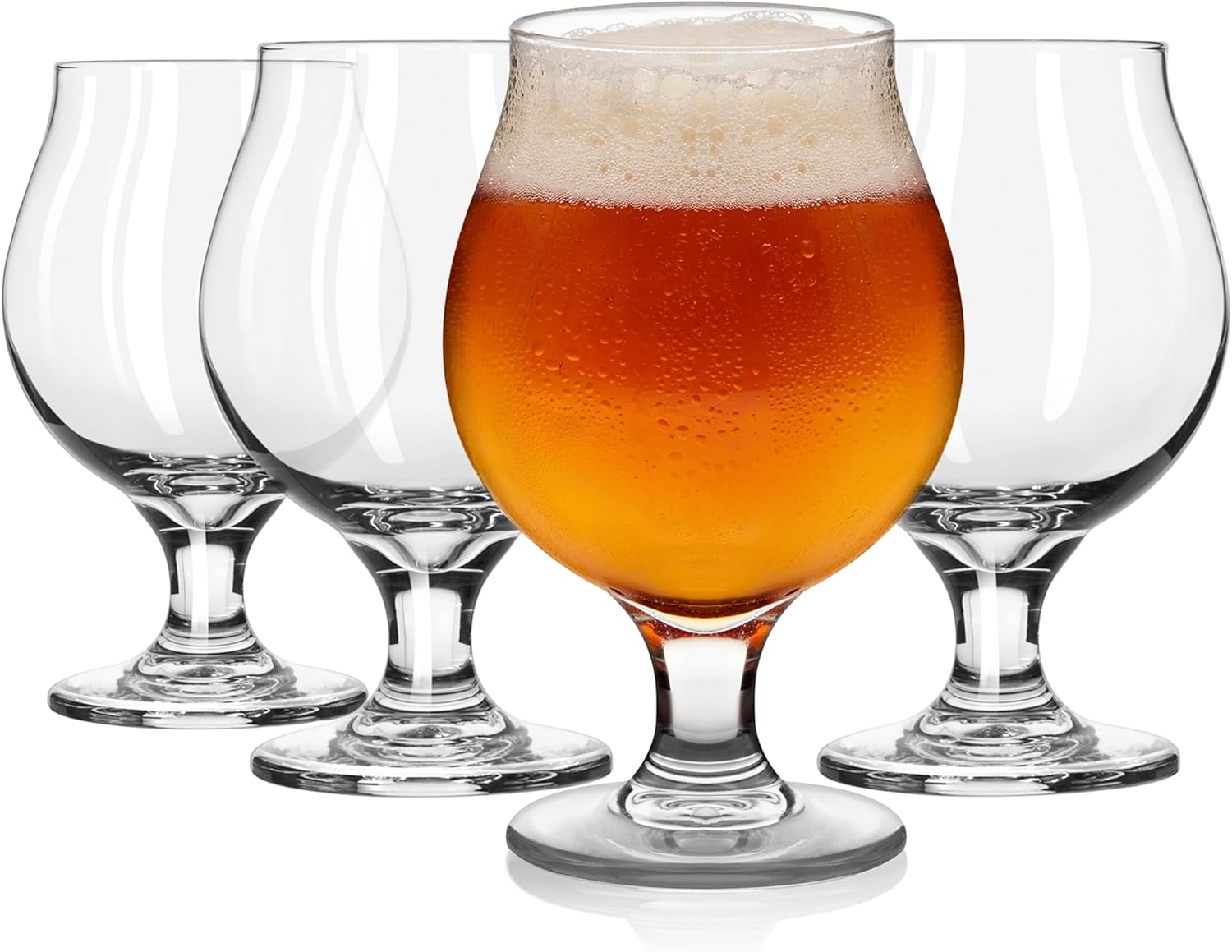
Treat an 8%+ beer more like a glass of wine than a round of light lager. A 12 oz pour of a 5% beer and a 4 oz pour of a 10% imperial stout land at roughly the same total alcohol, so bars and bottle shops that serve high-ABV beers in smaller snifters or tulip glasses are not being stingy, they are matching the pour to the strength. Eating something beforehand and pacing pours across an evening rather than back-to-back matters more with these beers than with anything in the 4% to 5% range.


FAQ
What ABV is considered a strong beer?
Most beer writers and brewers treat 8% ABV and up as strong or high-ABV, covering double IPAs, imperial stouts, barleywines, and Belgian quads.
What is the strongest beer style?
Barleywine and imperial stout both regularly reach 12% to 15% ABV using standard brewing yeast, and can go higher with specialty tolerant yeast strains or freeze concentration.
Is a high-ABV beer stronger than wine?
Standard wine runs 12% to 14% ABV, so a mainstream high-ABV beer at 8% to 10% is usually still a bit lower, though the strongest barleywines and imperial stouts can match or exceed table wine.
More Beer Facts and Guides
- World’s Strongest Beer: How Brewers Push Past 60% ABV
- ABV Equation: How Brewers Actually Calculate Alcohol Content


