
Champagne gets the credit, but beer is arguably the better match for a plate of oysters. The logic is simple: carbonation cuts through an oyster’s brine and cleanses the palate the same way a squeeze of lemon does.
Beer also has more room to play with flavor than wine does, from roasted stout to salted sour ale. There is even a beer style that puts real oysters in the brew kettle, dating back to the 1920s. Here is what actually works, and why.
Why Beer Works With Oysters
The basic mechanism is carbonation. An oyster’s liquor is salty and mineral-heavy, and beer’s bubbles scrub the palate clean between bites the same way they do with a rich meal.
So the next oyster tastes as fresh as the first.
Beyond that, the pairing comes down to matching intensity. A delicate, sweet oyster wants a light beer that will not drown it. A big, briny, mineral oyster can stand up to something with real roast or acidity behind it.
Stout: The Classic Pairing
A genuinely strange history
Stout and oysters is one of the oldest food and drink pairings still in regular use, and it has a strange history behind it. In the 1920s, breweries started adding real oysters, or oyster liquor, directly into the brew kettle.
A New Zealand brewery did it first in 1929. London’s Hammerton Brewery followed in 1938 with a Pentonville stout made using fresh oysters and, later, canned oyster concentrate, originally marketed as an added-nourishment ingredient the way lactose was added to milk stout.
The style nearly disappeared when oyster beds declined mid-century. It has since made a comeback, and a handful of breweries (Marston’s Oyster Stout among them) still brew a version today, some with real shells used in the process rather than the oyster itself in the finished beer.
Why a plain dry stout works too
You do not need an actual oyster stout to make the pairing work. A standard dry Irish stout does the job on its own merits.
Guinness in particular gets credited for the pairing constantly, and it comes down to the nitrogen. Guinness pours with a gas blend that is roughly 75 percent nitrogen and 25 percent CO2, which gives it that famously silky, creamy head.
That creamy texture and the beer’s roasted, faintly sweet malt balance out an oyster’s saltiness, drawing out its more complex, mineral notes rather than fighting them the way a crisp white wine sometimes can.
One caveat: this is specifically a dry stout thing. Save the 10%+ pastry stouts loaded with vanilla and lactose for dessert, not the raw bar.

Pilsner and Crisp Lager
If stout feels too heavy, go the other direction entirely. A crisp, dry pilsner works on delicate oysters the same way it works on fried food: the carbonation and light bitterness cut through without adding much of its own flavor, so the oyster stays the star.
This is the safest pairing on this list if you are unsure what style of oyster you are getting, since a well-made pilsner rarely clashes with anything briny.
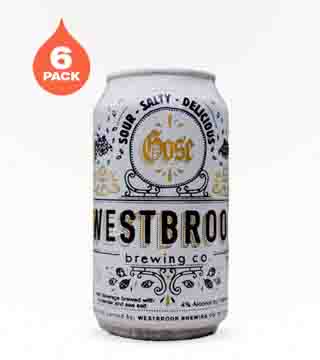
Gose: Matching the Brine
Gose is a tart, low-alcohol German wheat beer traditionally brewed with a pinch of salt and coriander. It might be the single best beer-and-oyster match on paper: the beer’s own salinity mirrors the oyster’s brine instead of contrasting it, its acidity cuts through the richness, and its low ABV means you can keep eating oysters instead of getting full on beer.
It is the pairing several beer writers and cicerones point to first when asked. It is easy to see why once you have tried it: a mineral, briny West Coast oyster next to a gose tastes like the two were made for each other.
Witbier: The Citrus Route
The other classic approach to oysters is a squeeze of lemon, so a bright, citrusy Belgian witbier essentially brings the garnish into the glass.
Witbier’s orange peel and coriander spicing plays the same role a lemon wedge does on the half shell, and its light body will not overpower a delicate oyster. This is the beer to reach for if you always ask for extra lemon at the raw bar.
Quick Picks by Oyster Type
| If Your Oyster Is… | Reach For | Why |
|---|---|---|
| Briny and mineral (West Coast, e.g. Kumamoto, Shigoku) | Gose or saison | Salinity and acidity mirror the brine instead of fighting it |
| Big, salty and full-flavored (East Coast, e.g. Blue Point) | Dry Irish stout | Roast and creamy body give the oyster something to push back against |
| Sweet and delicate (small, mild oysters) | Pilsner or crisp lager | Light body and carbonation cleanse without overpowering |
| Served with a lemon wedge | Witbier | Orange peel and coriander echo the citrus you would add anyway |
| Fried or breaded oysters | Hoppy pilsner or session IPA | Hop bitterness cuts through the fat and breading |
Beers to Try With Oysters



Gear You Actually Need to Eat Oysters at Home
Buying good beer is the easy part. Getting a dozen oysters open safely, without turning your hand into part of the appetizer, takes three real pieces of gear.
A proper shucking knife, a cut-resistant glove, and something to actually serve them on so they stay cold. All three are cheap, and all three make the difference between a fun night and a trip to urgent care.


FAQ
What is the best beer to drink with oysters?
A dry Irish stout like Guinness is the most traditional pairing, thanks to its creamy, nitrogenated head and roasted malt balancing the oyster’s brine. A gose is the closest thing to a technically perfect match, since its own saltiness mirrors the oyster’s.
Why do stout and oysters go together?
The pairing dates back over a century, and some breweries once brewed stout with real oysters added to the kettle. Today it works because the beer’s roasted malt and creamy texture balance the oyster’s salt without overpowering it.
Is beer better than champagne with oysters?
It depends on taste, not quality. Both work through similar mechanics (carbonation and acidity cutting through brine), but beer offers a wider range of flavor profiles to match different oyster styles, from delicate and sweet to big and mineral.
What beer pairs with fried oysters?
A hoppy pilsner or a session IPA works best here. The hop bitterness cuts through the breading and oil in a way a delicate style cannot.
More Beer and Food Pairings
- Best Beer with Seafood
- Mastering the Art of Beer and Food Pairing
- Best Beers to Pair with Chocolate Desserts
- Guinness Draught Review
- Pilsner Urquell Review
For pairing beyond seafood, our general beer and food pairing guide covers cheese, chocolate and spicy food too.


